1. Mechanism of Air Compression Therapy
A component-by-component look at how sequential pneumatic compression works.
Read article →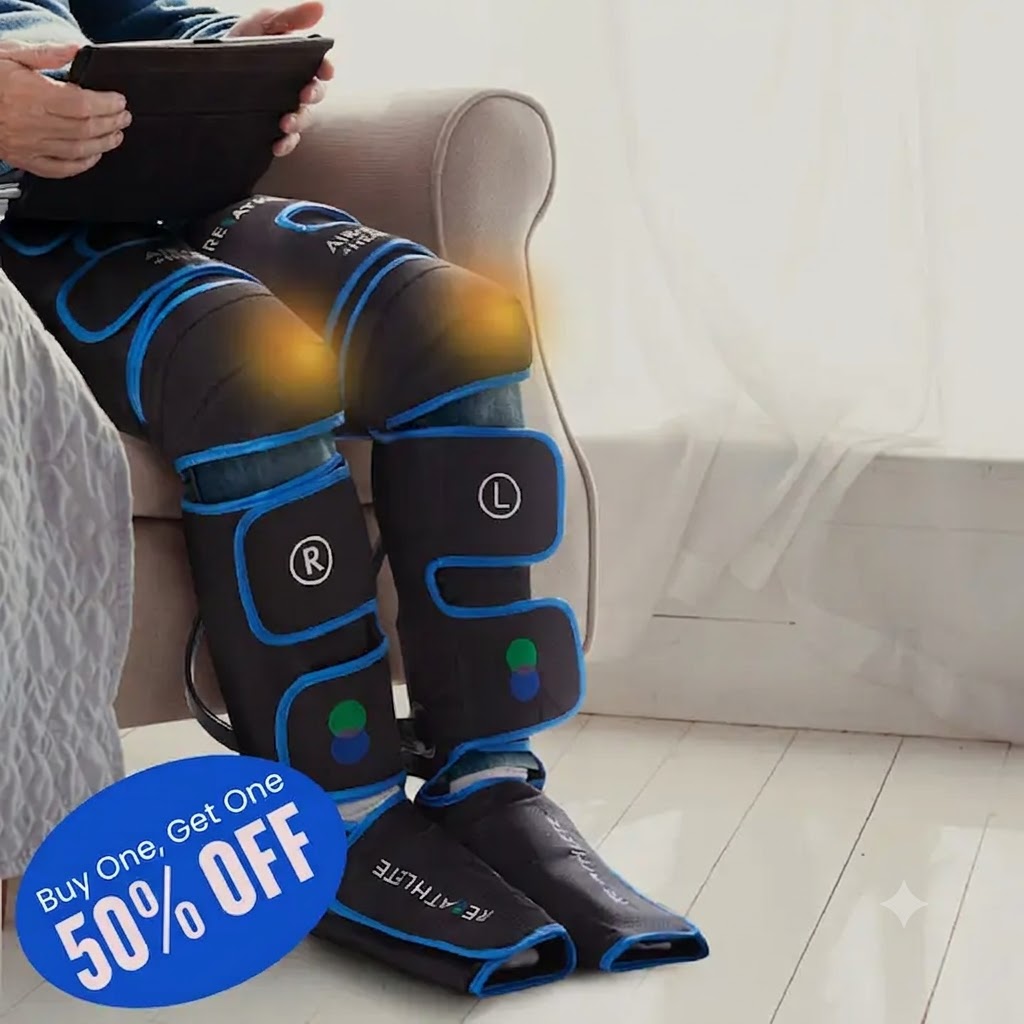
The Air-C Compression Massager is a wrap-style recovery device that uses sequential air compression and gentle heat to relax tight muscles at home, without a therapist appointment or a bulky clinical machine.
Ships direct from the manufacturer · Introductory pricing while supplies last
The Air-C Compression Massager wraps around an arm, leg, or foot and uses a built-in air pump to inflate internal chambers in a rolling, wave-like sequence, then release them, imitating the rhythm of hands-on compression massage while an optional heat setting adds warmth to the treated area.
Fasten the Air-C Compression Massager sleeve around the target area with the adjustable strap.
Select compression intensity and, if wanted, the heat function from the handheld controller.
Air chambers inflate and deflate in sequence for a 15–20 minute session.
The Air-C Compression Massager powers down on its own once the cycle finishes.
The Air-C Compression Massager is a battery-powered, wearable massage device that combines pneumatic (air-based) compression with an optional heat setting, built to be used at home on arms, legs, or feet after a long day, a workout, or extended time on your feet.
Unlike vibration-only handheld massagers, the Air-C Compression Massager belongs to a category called intermittent pneumatic compression (IPC) devices — the same general principle used in clinical recovery boots and compression sleeves, scaled down into a lightweight consumer wrap with a simple controller.
It's built around three ideas: a snug wrap that holds air chambers against the limb, a pump-and-valve system that inflates those chambers in sequence, and a controller that lets the user set intensity, heat, and session length.
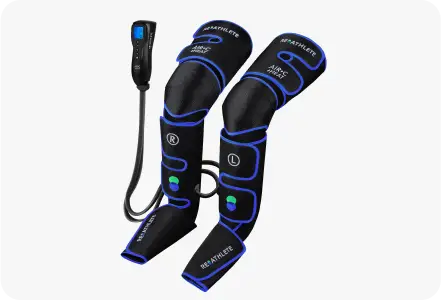
The Air-C Compression Massager stands out because it targets a whole limb with even, sequential pressure instead of a single vibrating point, pairs that pressure with adjustable heat, and runs cordless — three features rarely combined in one home device at this size.
Multiple air chambers press along the full wrap, not just one spot, so the Air-C Compression Massager treats the whole calf, arm, or foot in a single session.
Heat is layered onto the compression cycle, so the Air-C Compression Massager can loosen tight tissue while it presses, instead of doing one or the other.
A rechargeable battery and handheld controller mean the Air-C Compression Massager can be used on the couch, in bed, or while traveling, with no wall outlet nearby.
The Air-C Compression Massager works through five coordinated parts — the air chambers, the micro-pump, the pressure valve system, the heating element, and the controller — that together inflate, hold, release, and reheat the wrap in a repeating cycle.
What it is: A set of stitched, sealed air pockets running the length of the sleeve.
Why it's there: A single air bag would only squeeze one wide area at once. Splitting the sleeve into separate chambers lets the Air-C Compression Massager inflate them in sequence — ankle first, then calf, for instance — which is what creates the "milking," wave-like pressure pattern instead of one flat squeeze.
Verdict: This is the part that actually separates a real compression massager from a basic inflatable cuff — sequential chambers are the mechanism, not a marketing detail.
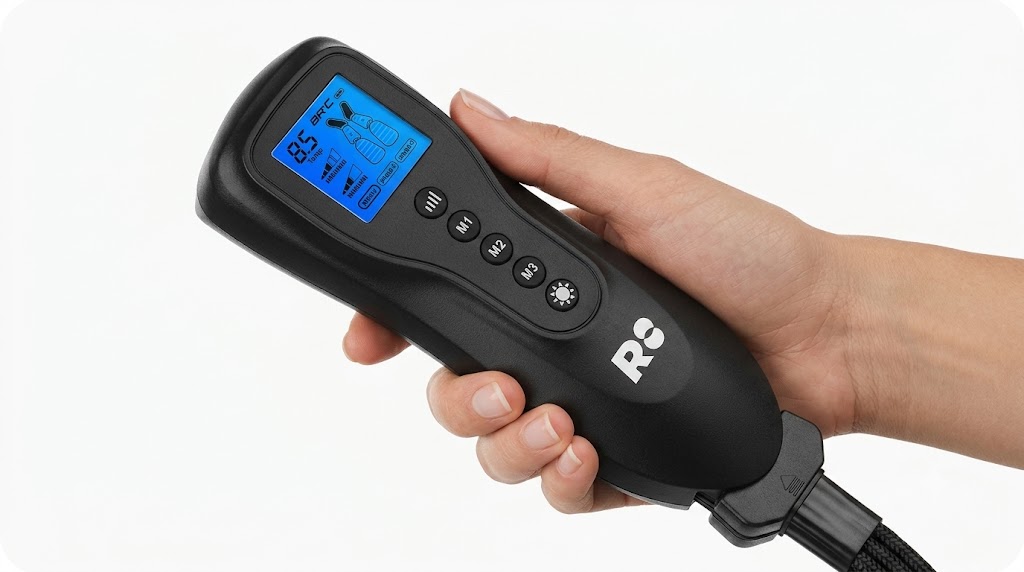
What it is: A small internal pump paired with directional valves that route air to one chamber at a time.
Why it's there: Without a valve system, the pump would just fill the whole sleeve at once. The valves are what make the sequencing in Component 1 possible — they open and close on a timer so pressure moves along the limb rather than clamping down everywhere simultaneously.
Verdict: The pump provides the air; the valves provide the pattern. Both have to work together for the Air-C Compression Massager's compression to feel like a rolling massage rather than a static clamp.
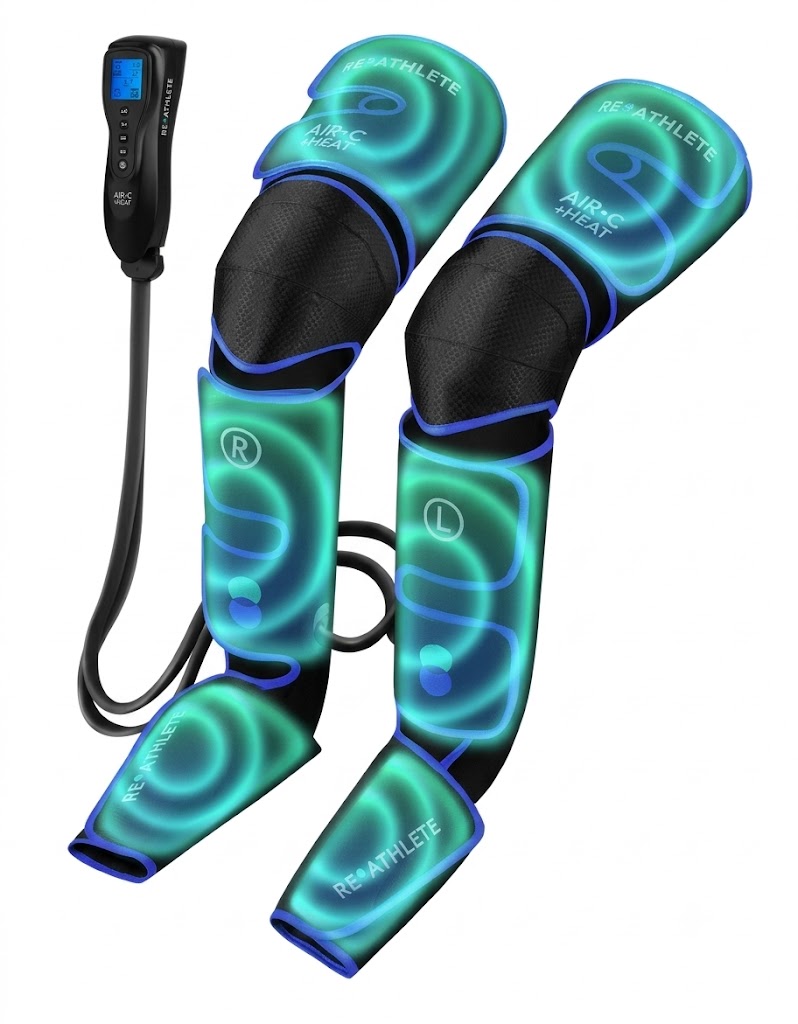
What it is: A thin heating layer built into the inner lining of the wrap.
Why it's there: Warmth increases local blood flow and softens muscle and connective tissue, which can make the tissue more receptive to the compression cycle. Adding heat to the same wrap avoids using a separate heating pad before or after the massage.
Verdict: Heat is a genuine complement to compression rather than a gimmick, but it's a comfort layer, not a substitute for medical heat therapy prescribed for an injury.
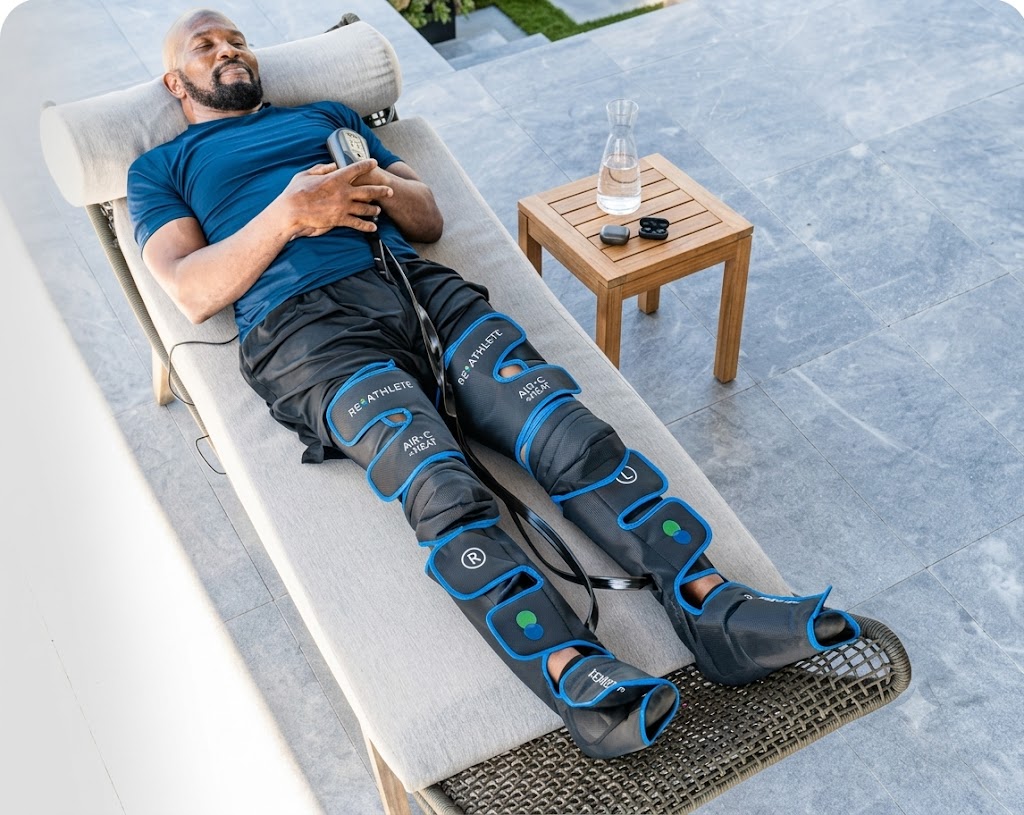
What it is: The wired or wireless unit with buttons for intensity level, heat toggle, and session timer.
Why it's there: Different people tolerate different pressure levels — the controller lets the intensity be dialed down for sensitive skin or up for larger muscle groups, instead of the device running one fixed pressure for everyone.
Verdict: The controller is what makes the same hardware usable across different body types and comfort levels; without it, the Air-C Compression Massager would be a one-size-fits-none device.
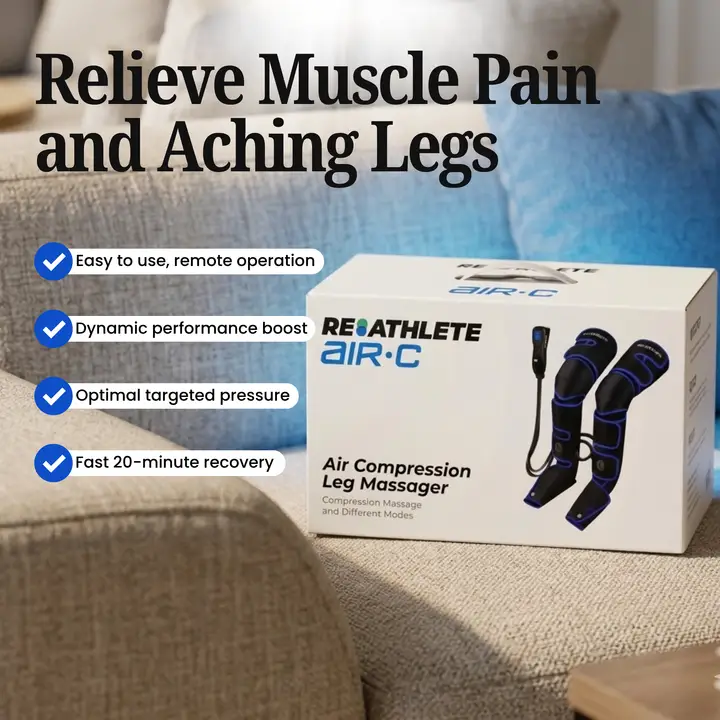
What it is: An internal lithium battery paired with a preset cycle timer, usually 15–20 minutes.
Why it's there: A cordless battery removes the need to sit near an outlet, and the auto-shutoff prevents the sleeve from running (and heating) longer than recommended if the user falls asleep or forgets it's on.
Verdict: This is a safety and convenience component more than a "massage" component, but it directly affects whether the device gets used consistently, which matters more than any single session's intensity.
The main benefits of the Air-C Compression Massager are more comfortable, lighter-feeling legs or arms after long days, a relaxing wind-down routine, and an at-home alternative to booking a massage appointment for everyday muscle tightness.
Users commonly describe legs feeling less heavy after standing or sitting for long stretches when using the Air-C Compression Massager in the evening.
The rhythmic squeeze-and-release pattern of the Air-C Compression Massager is often used as a wind-down ritual before bed.
Applied after walking, standing, or light exercise, the Air-C Compression Massager can help tight calves and feet feel looser.
No appointments — the Air-C Compression Massager is ready whenever there's 15–20 minutes free at home.
Adjustable pressure means the Air-C Compression Massager can be set gentle for sensitive users or firmer for others.
The built-in heat setting on the Air-C Compression Massager adds a soothing layer without a separate heating pad.
These are typical, reported comfort benefits of compression-and-heat massage in general use — the Air-C Compression Massager is a comfort and relaxation device, not a medical treatment. See the Research section below.
Common themes in Air-C Compression Massager feedback include how quickly it warms up, how snug the wrap fits different leg sizes, and how the auto-shutoff makes it easy to use before bed without watching a clock.
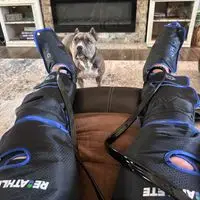
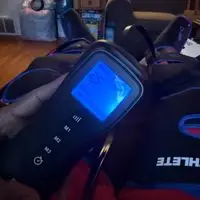
Individual experiences vary. Testimonials reflect general themes reported by users and are not a guarantee of results.
The main pros of the Air-C Compression Massager are its multi-zone compression, added heat, and cordless design, while the main cons are that it requires charging and, like any wearable device, needs the correct size wrap for the best fit.
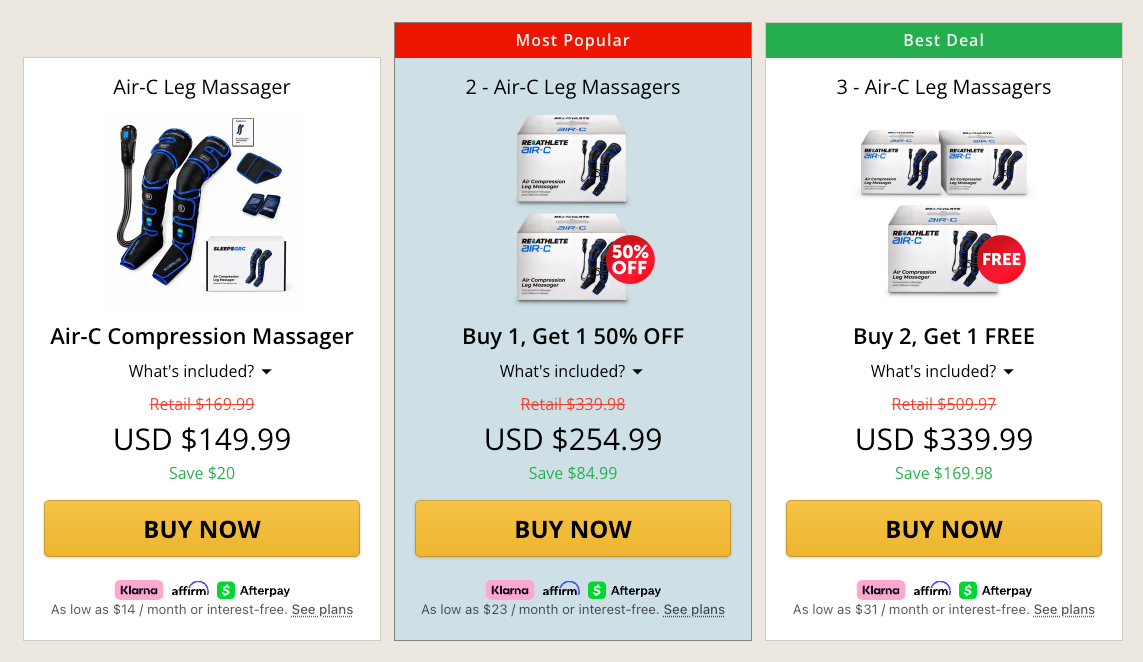
The Air-C Compression Massager is typically offered in single-unit, multi-pack, and best-value bundle options, with per-unit cost generally dropping as bundle size increases — exact current pricing is confirmed on the official order page.
| Bundle | Best For | Notes |
|---|---|---|
| Starter (1 unit) | First-time users trying the Air-C Compression Massager | Good for testing fit and settings |
| Popular (2–3 units) | Households or two treatment areas | Lower per-unit cost than Starter |
| Best Value (4+ units) | Gifting or long-term daily use | Lowest per-unit cost tier |
Yes, the Air-C Compression Massager is generally designed for daily short sessions of about 15–20 minutes on healthy, unbroken skin, following the included guide — anyone with a circulatory condition should check with a doctor first.
The Air-C Compression Massager works by inflating and deflating internal air chambers in a wave-like sequence, applying and releasing pressure against the limb, often paired with an adjustable heat setting for added comfort.
An Air-C Compression Massager session typically runs 15 to 20 minutes per cycle, and the device shuts off automatically so there's no need to time it manually.
Yes, the Air-C Compression Massager includes a money-back guarantee window through the official order page, giving new users a chance to try it risk-free.
People with deep vein thrombosis, active blood clots, open wounds, severe peripheral vascular disease, or who are pregnant should avoid the Air-C Compression Massager unless a doctor approves its use first.
Yes, the Air-C Compression Massager's cordless, rechargeable design makes it practical to pack for travel, though airline battery-size rules should always be checked before flying.
Most Air-C Compression Massager users report no side effects beyond mild, temporary redness or warmth at the treated area, which typically fades shortly after the session ends.
Because the Air-C Compression Massager applies external, adjustable pressure rather than deep tissue force, most healthy adults tolerate it well at low-to-medium intensity.
Anyone with diagnosed blood clots, deep vein thrombosis, severe varicose veins, open wounds, infections, or a pacemaker should talk to a doctor before using the Air-C Compression Massager or any compression device.
Before buying the Air-C Compression Massager, confirm the correct wrap size for your leg or arm, review the guarantee window and return process, and buy through the official order page to make sure the unit is covered by that guarantee.
Research on intermittent pneumatic compression (IPC) — the general technology behind the Air-C Compression Massager — has studied how rhythmic external pressure affects circulation and perceived muscle soreness, mostly in clinical and sports-recovery settings.
Peer-reviewed sports-medicine literature has examined pneumatic compression garments as a recovery tool after exercise, generally reporting improvements in perceived soreness and comfort, with more mixed evidence on measurable performance recovery — a distinction worth understanding rather than glossing over. Clinically, IPC devices have a longer track record in circulation support, which is a different use case from at-home relaxation.
This is why the educational articles below go deeper into the physiology — how compression affects blood and lymph flow, what's understood (and not yet settled) about delayed-onset muscle soreness, and how heat and pressure interact at a tissue level. They're written to explain the science plainly, not to oversell a home device as clinical treatment.
These three educational articles unpack the science behind air compression, muscle recovery, and the lymphatic system in plain language, so you understand what the Air-C Compression Massager is — and isn't — doing.
A component-by-component look at how sequential pneumatic compression works.
Read article →What actually causes post-activity soreness, and what helps.
Read article →How the lymphatic system clears fluid, and why compression is used to support it.
Read article →